Introduction
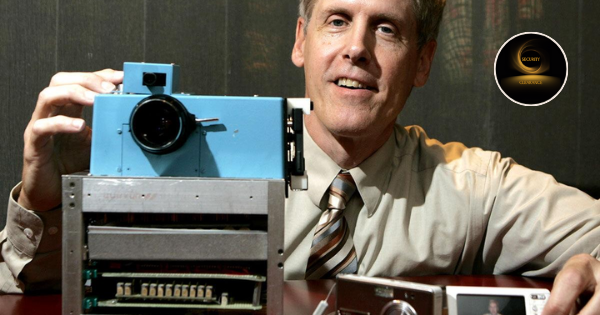
Kodak is frequently used as a cautionary tale about innovation. But it is most useful for a different reason: it shows how an organization can recognize a structural shift and still fail to act on it. In intelligence terms, Kodak is not primarily a story of missing data. It is a story of unconverted insight—signals that were available, trends that were observable, and implications that were discussable, but that never became a decisive, coherent strategic posture.
This is why Kodak remains one of the clearest applied cases for decision support: the company did not collapse because it lacked information. It collapsed because the organization could not translate what it knew into choices that were both timely and psychologically sustainable.
The comforting myth: “Kodak didn’t get digital”
Public explanations of corporate failure tend to favor simple causes. “They didn’t see it coming.” “They were obsolete.” “They lacked competence.” Kodak is often placed inside this category: a film company that could not understand the digital era.
That story is comforting because it keeps the lesson at a safe distance. If failure is caused by ignorance, the cure is obvious: gather more information, hire better experts, follow the trend.
Kodak is uncomfortable precisely because this cure does not apply. Kodak did not fail due to lack of awareness. Over decades, the organization had exposure to the technological direction, the market’s gradual behavioral changes, and the economic mechanisms that would eventually compress film margins and expand the convenience of digital photography.
From an intelligence perspective, Kodak demonstrates a harsher reality: information can be correct, signals can be visible, and decisions can still be wrong—because the failure sits in interpretation, prioritization, timing, and organizational willingness to cannibalize the present in order to control the future.
Information existed; strategic orientation did not
The essential intelligence question is not “Was the organization informed?” but “Was the organization oriented?” These are not synonyms.
An organization can be informed in multiple ways:
- through technical R&D knowledge,
- through market observation,
- through competitive benchmarking,
- through internal financial reporting.
But orientation requires a different kind of work:
- hierarchy of what matters,
- scenario logic,
- explicit choices between incompatible futures,
- acceptance of irreversible trade-offs.
Kodak’s problem was not that it lacked data; it was that the organization struggled to produce a clear, enforceable strategic direction from that data—especially when the direction threatened the existing economic engine.
In intelligence terms, this is a conversion failure: the inability to transform dispersed insights into decision-ready judgment. When conversion fails, organizations often retreat into what they can measure reliably and control operationally. This retreat feels rational. It is also frequently fatal.
The real strategic problem: inevitable cannibalization
The most decisive strategic variable in Kodak’s case was not whether digital photography would exist. It was whether Kodak would accept a brutal premise: digital would cannibalize film.
Once that premise is accepted, the strategic question becomes uncomfortable and very precise:
- Is it better to cannibalize yourself early—while you still have cash, brand trust, distribution reach, and manufacturing scale to reinvest?
- Or is it better to defend the existing model and allow external players to cannibalize you—while you gradually lose strategic freedom?
Organizations often hesitate here because the “right” option is rarely painless. Self-cannibalization looks like self-harm in the short term: it threatens revenue, disrupts internal power structures, and forces people to admit that their core competence is becoming less valuable.
Strategic intelligence is meant to make this dilemma explicit, quantify the cost of inaction, and show the long-run asymmetry between the two paths. When intelligence is weak or politically constrained, the organization delays the confrontation. Delay creates the illusion of stability. Meanwhile, the market decides.
Kodak’s challenge was therefore not digital as a technology; it was digital as a decision that demanded intentional destruction of the old business model before the market forced that destruction externally.
Organizational bias: past success as a distorting lens
Cognitive bias is not a personal flaw; at scale, it becomes organizational structure. Kodak operated for decades with strong margins and a dominant position. That success created a predictable set of distortions:
- Status quo bias: a preference for continuity because continuity has historically been rewarded.
- Success bias: the belief that what worked will keep working because it has worked for a long time.
- Overconfidence: the assumption that market leadership equals market control.
- Framing bias: interpreting digital as a complement or niche rather than a replacement.
These distortions are not irrational in the short term. They are adaptive responses to a stable environment. The problem is that disruption breaks the environment, while the organization’s mind keeps operating as if stability still holds.
A mature intelligence function does not pretend to remove bias. It is designed to contain it by:
- making assumptions explicit,
- forcing alternative hypotheses,
- testing “uncomfortable scenarios,”
- separating operational performance from strategic viability.
When this containment fails, the organization becomes highly competent at managing the present while becoming increasingly blind to the future.
Kodak’s past did not only provide assets; it also provided the strongest resistance to reorientation.
Strong operational analysis, weak strategic analysis
Kodak’s operational excellence is part of the tragedy. In many failing organizations, operational incompetence is obvious. In Kodak’s case, the organization maintained strong capabilities in manufacturing, distribution, product quality, and process optimization.
Operational analysis answers questions like:
- How do we improve efficiency?
- How do we protect margins?
- How do we optimize distribution?
- How do we control cost?
These questions matter. But they operate within a stable model.
Strategic analysis asks different questions:
- Which model will survive?
- Which part of our revenue is structurally threatened?
- Which capabilities will remain valuable?
- What must we abandon to remain in control?
When strategic analysis is weak, operational analysis becomes a trap: it produces impressive short-term results while deepening long-term vulnerability. The organization can interpret operational strength as strategic strength, when in reality it is merely the efficient execution of a model whose lifespan is shrinking.
From an intelligence standpoint, this is a classic mismatch between “local rationality” and “systemic rationality.” Each decision can be rational in isolation. The aggregate outcome becomes irrational.
Timing: the silent enemy of strategic decisions
Even when leadership recognizes the direction of change, timing determines whether recognition becomes advantage or regret.
In disruption dynamics, the window of strategic freedom is finite:
- Early: the incumbent has resources and legitimacy to reshape itself.
- Mid: the incumbent can still pivot but pays a higher price, with more internal conflict.
- Late: the pivot becomes survival-driven, reactive, and often too slow.
Intelligence is not only about what is true; it is about what is true in time. An analysis that arrives after the decision window is closing becomes documentation, not guidance.
Kodak’s case illustrates a timing trap: you can see the trend early but still behave as if you can postpone the moment of decision indefinitely. The market does not respect internal timelines. It moves on adoption, cost curves, and behavioral shifts.
The intelligence function, when properly positioned, makes timing visible: it identifies the moment when “waiting for more certainty” becomes the most dangerous choice of all.
What intelligence would have done differently
It is important to avoid a simplistic counterfactual: intelligence does not guarantee success. Markets are complex and competition is brutal. The question is not “Would intelligence have saved Kodak?” but “What would intelligence have changed in the decision posture?”
A serious intelligence approach could have improved Kodak’s decision architecture by:
- Separating present performance from future sustainability Strong film profits could have been treated as fuel for transformation, not proof that transformation could be delayed.
- Making cannibalization a strategic hypothesis, not a taboo Instead of treating self-disruption as unacceptable, intelligence would force a clear comparison: the cost of self-cannibalization versus the cost of being cannibalized.
- Building disciplined scenarios, not narratives Not “digital is coming,” but structured alternatives: adoption pace, consumer behavior, new entrants, cost declines, supply chain changes, and what each scenario implies for Kodak’s position.
- Stress-testing assumptions What if margins collapse faster than expected? What if new entrants control distribution channels? What if consumers stop valuing print? What if smartphones become the default camera?
- Reducing confirmation bias at the top By institutionalizing challenge functions: red-teaming, alternative hypotheses, and dissent mechanisms that prevent leadership from selecting only comforting information.
None of these steps produce certainty. They produce direction.
The core lesson: knowing is not deciding
The deepest value of the Kodak case is not the technological timeline. It is the intelligence principle it reveals:
- Data does not equal understanding.
- Understanding does not equal orientation.
- Orientation does not equal decision.
- Decision does not equal execution unless the organization accepts painful trade-offs.
Kodak’s failure shows what happens when an organization remains trapped between two incompatible futures: it tries to preserve the old model while tentatively exploring the new one, without committing enough to reshape itself.
This “half-step” strategy is psychologically appealing. It feels balanced. In disruption, it is often the worst option: it sacrifices the chance to lead the new era while still weakening the old one.
Strategic intelligence exists to prevent exactly this: the prolonged postponement of a decision that the environment has already made inevitable.
Why Kodak matters to decision-makers today
Kodak is not a museum case. It is a recurring pattern in modern organizations because the conditions that created it are now common:
- rapid technological substitution,
- platform shifts,
- changing consumer behavior,
- reputational volatility,
- information overload that creates the illusion of control.
The Kodak lesson is not “embrace technology.” It is “embrace decision clarity under uncertainty.” Often the most dangerous move is to treat a structural shift as optional.
Intelligence adds value when it does one thing well: it forces decision-makers to see that certain futures are incompatible—and that delaying choice is itself a choice with a cost.
Conclusion
Kodak did not fail because it could not see the future. It failed because it could not decide what to do with what it could already see.
That is the essential intelligence warning for any leader operating in uncertainty: the highest risk is not ignorance; it is the illusion that knowledge automatically turns into action. Intelligence, at its best, does not predict the future. It helps decision-makers take difficult decisions while the future is still open.