
Introduction
In the study of psychological operations, the 1990–1991 Gulf War represents a quiet but decisive turning point. Not because of technological innovation alone, but because tens of thousands of Iraqi soldiers surrendered without fighting, convinced that resistance was pointless, dangerous, or irrational.
This mass surrender was not a spontaneous reaction to military superiority. It was the result of a systematic psychological campaign, integrated with military operations and aimed at the most vulnerable element of the Iraqi forces: the will to fight.
1. Strategic context
In August 1990, Iraq invaded Kuwait. A UN-mandated coalition formed rapidly. On paper, Iraqi forces appeared strong. In reality, morale was fragile, leadership distrusted, and fear widespread.
PSYOPS were designed to amplify existing weaknesses, not fabricate new ones.
2. Psychological objective
The goal was not terror, but persuasion through rational fear. Soldiers were encouraged to view surrender as the safest and most logical choice.
This marks a shift from propaganda to decision engineering.
3. Leaflets
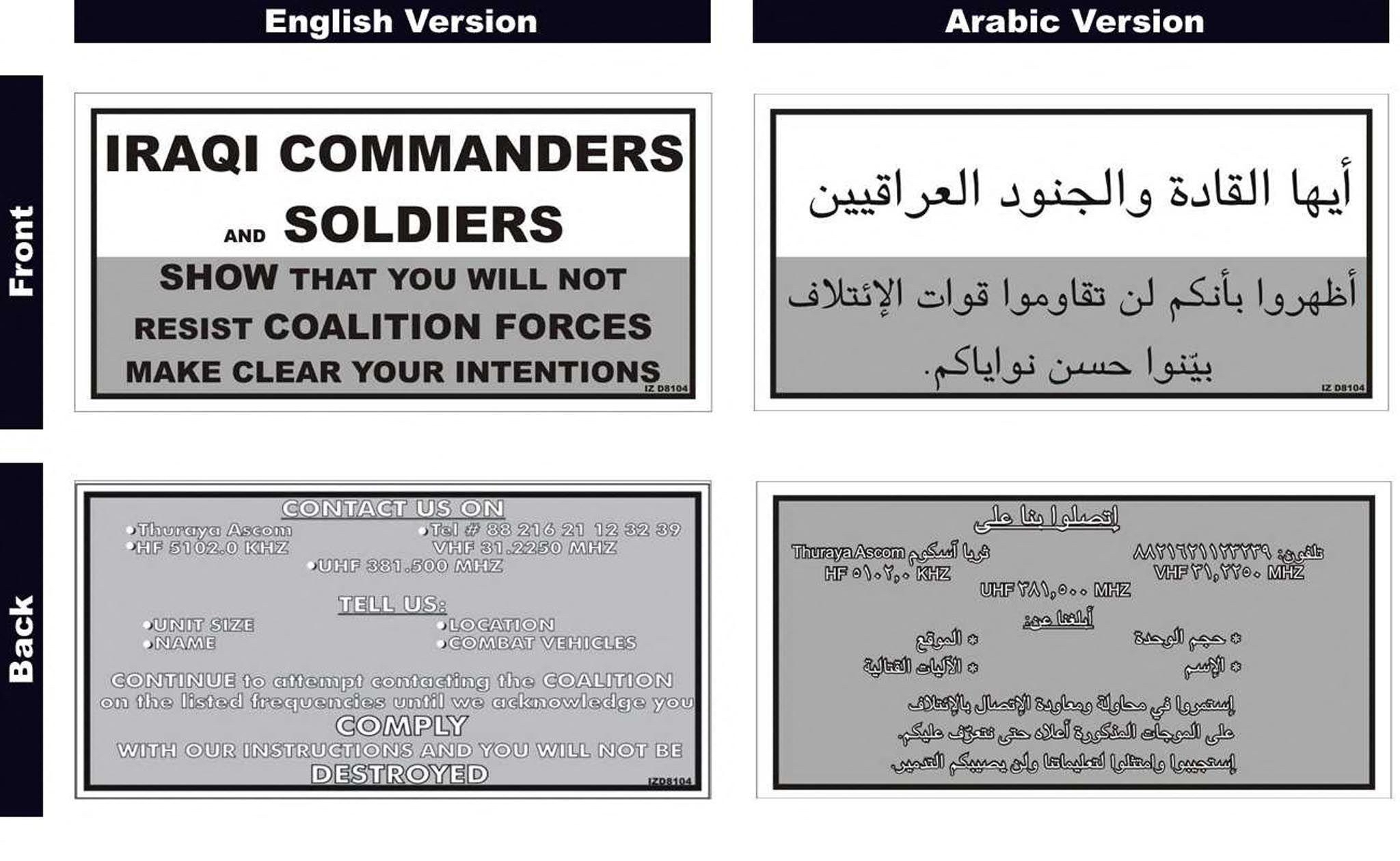
Millions of leaflets were dropped, offering clear instructions on surrender, reassurance about treatment, and warnings of impending strikes.
Psychologically, they provided predictability, perceived control, and reduced uncertainty.
4. Radio broadcasts
Radio messaging reinforced battlefield realities, undermining regime credibility and creating cognitive isolation.
When enemy messages align with observed reality, resistance collapses.
5. Technological dominance and perception
Precision strikes created a sense of omnipresence and helplessness. Soldiers felt there was no safe place.
6. Behavioral contagion
As surrender proved safe, it spread rapidly. Behavior became socially validated.
7. Psychological analysis
Gulf War PSYOPS leveraged loss aversion, fear, conformity, and distrust in leadership. Soldiers faced an asymmetrical choice where fighting seemed irrational.
8. Results
Tens of thousands surrendered. Ground combat was brief. Coalition casualties were minimized.
This is the highest achievement of PSYOPS: victory without direct confrontation.
Conclusion
The Gulf War shows that true superiority lies in shaping perception and decision-making. When the mind yields, the battlefield follows.